


“I used it on a cracked metal bracket and honestly didn’t expect much. After it cured, it felt solid and stayed in place.”
Steel-Reinforced Epoxy Repair Compound
Heavy-Duty Steel Repair Putty


Trusted for tough repairs
For home, workshop and jobsite projects
Steel-Reinforced, Weld-Like Bond — Mixes into a moldable epoxy compound that cures into a hard repair for cracks, holes and damaged metal surfaces.
Waterproof, Durable Cured Finish — Helps seal leaking areas and creates a solid patch that resists cracking, peeling and deformation after full curing.
Shapes to Irregular Damage — Knead and press it into broken edges, uneven gaps and difficult repair areas on metal, wood, concrete and PVC.
Limited-Time Offer Ends In
The timer reflects the published promotion end time.
00
DAYS
00
HOURS
00
MINUTES
00
SECONDS
Regular price
$19.00
Regular price
$19.00
Sale price
$29.00
Unit price
per
BUNDLE & SAVE
Couldn't load pickup availability

Heavy-Duty Steel Repair Putty
Regular price
$19.00
Regular price
$19.00
Sale price
$29.00
Unit price
per


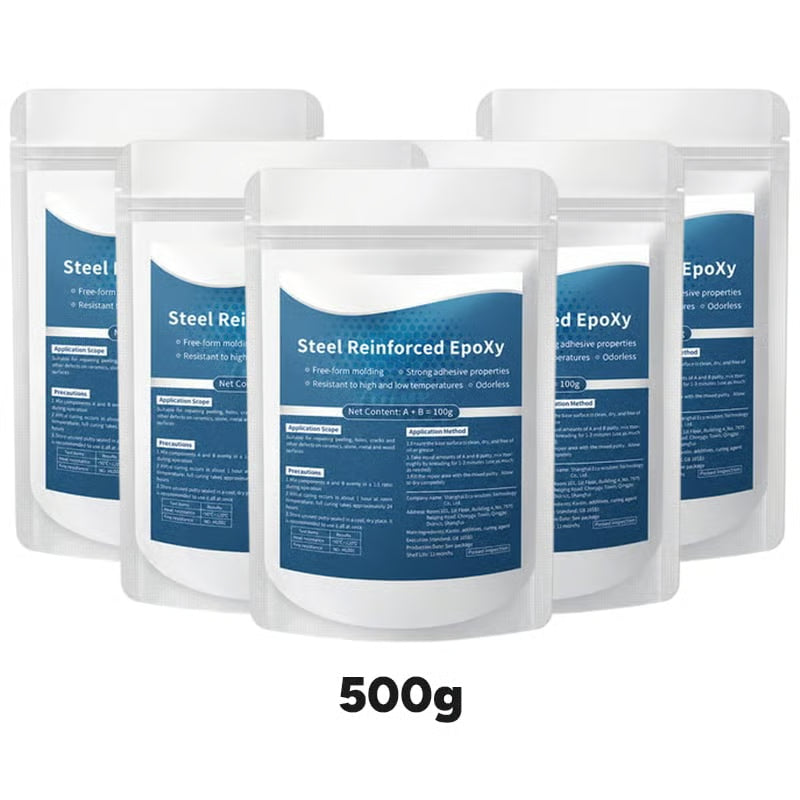


1. Creates A Weld-Like Bond Without Welding Tools
Most quick fixes only sit on the surface. Tape peels. Glue runs. Soft fillers crack when pressure hits. High-Strength Multi-Purpose Repair Clay is engineered to attach firmly to metal, plastic, and ceramic surfaces. Once mixed and cured, it forms a tough, weld-like bond that helps seal breaks, fill holes, and reinforce damaged areas.
“I used it on a cracked metal bracket and honestly didn’t expect
much. After it cured, it felt solid and stayed in place.”

2. Waterproof Sealing For Pipes, Leaks, And Damp Repair Areas
Water damage gets worse fast when the patch cannot handle moisture. This repair clay is waterproof after curing, making it useful for sealing water pipe leaks, plugging small holes, and reinforcing surfaces that may face moisture or outdoor conditions.
“I had a small leak around a plastic pipe joint. I cleaned it,
mixed the clay, pressed it in, and let it dry. No more dripping.”
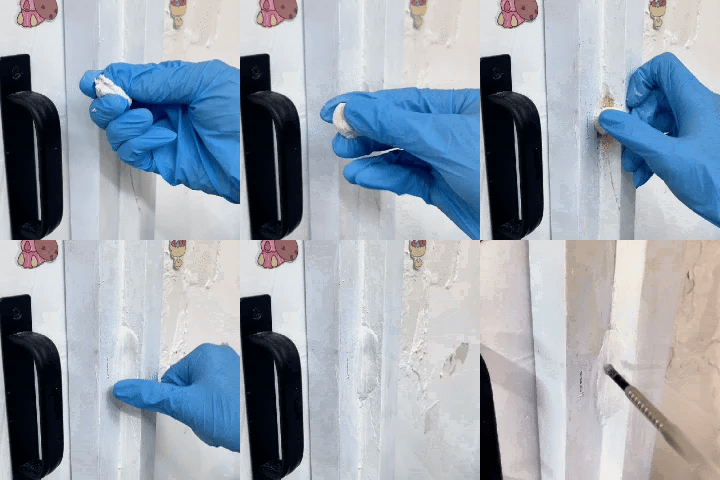
3. Shapes By Hand To Fit Cracks, Holes, And Uneven Breaks
Flat patches do not work well on curved pipes, broken corners, or irregular gaps. The clay has strong plasticity, so you can pinch, knead, shape, press, and mold it directly into the damaged area. It fills uneven spaces more easily than rigid repair strips or liquid-only adhesives.
“The best part is that I could shape it exactly where I needed it.
It pushed into the crack instead of sliding off.”
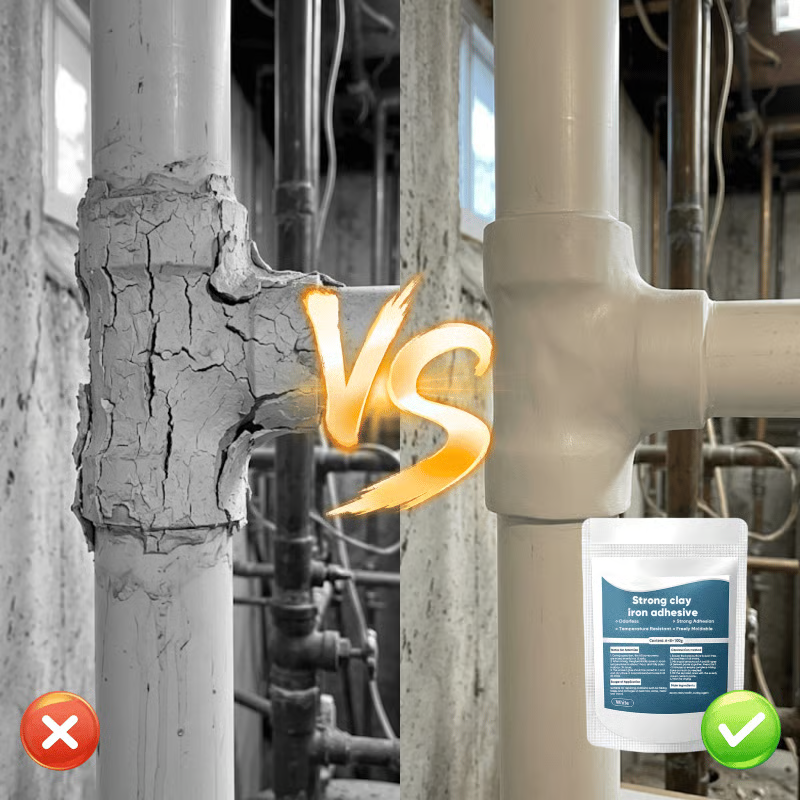
4. Hardens Into A Durable Repair That Resists Cracking And Deformation
Some fillers dry soft, shrink, or crumble when pressure is applied. Once fully cured, this repair clay reaches high hardness and helps resist cracking, deformation, and peeling. That makes it practical for repairs that need more than a cosmetic cover-up.
“I used it to patch a chipped tile corner in my workshop.
After drying, it was much harder than I expected.”

5. Simple One-Person “Pinch And Stick” Application
You do not need special equipment, complicated preparation, or a professional repair setup. Just clean the surface, take equal amounts of A and B putty, knead them together for 1–3 minutes, apply the mixed clay, and allow it to dry. It is designed for fast, hands-on repair work.
“I’m not very handy, but this was straightforward. Mix equal parts,
press it on, smooth it out, and let it cure.”

“I fixed a hole that had been bothering me for months. It took a few minutes to apply, and the next day it was solid.”
Verified Buyer
6. Works Across Multiple Everyday Repair Scenarios
Keeping different adhesives for every material gets frustrating fast. High-Strength Multi-Purpose Repair Clay is made for metal fractures, plastic piping, water pipe leaks, tile repair, and hole plugging. Its moldable texture makes it useful for many small repair jobs around the home, garage, workshop, or utility area.
Useful for metal, plastic, ceramic, and tile repairs
Designed for waterproof sealing and hole plugging
* Results based on a survey of 4,125 customers.
7. How To Use High-Strength Multi-Purpose Repair Clay In 4 Simple Steps:
01
Clean The Surface
Make sure the repair area is clean, dry, and free of oil.
02
Mix Equal Parts
Take equal amounts of A and B putty, then knead for 1–3 minutes until fully blended.
03
Apply And Let It Cure
Press the mixed clay firmly onto the damaged area. Initial curing takes about 1 hour, with full curing in about 24 hours.

WHY CHOOSE WATERMELON SLICER OVER TRADITIONAL KNIVES?
This moldable repair clay combines strong adhesion, waterproof
performance, and hardened durability—making it a smarter repair
option than basic glue, tape, or soft filler.
Feature
High-Strength Repair Clay
Glue / Tape / Filler
Bonding Strength
✅ Weld-like bond
❌ Peels under pressure
Material Compatibility
✅ Metal plastic ceramic
❌ Limited materials
Shape Flexibility
✅ Molds uneven gaps
❌ Poor fit
Waterproof Performance
✅ Seals damp areas
❌ Weakens with moisture
Cured Durability
✅ Hard durable finish
❌ Shrinks or cracks
Application Method
✅ Mix knead press
❌ Needs extra tools
Weather Resistance
✅ Handles varied conditions
❌ Degrades outdoors
What Customers Are Saying
“I fixed a hole that had been bothering me for months. It took a few minutes to apply, and the next day it was solid.”
Verified Buyer
“I had a small leak around a plastic pipe joint. I cleaned it, mixed the clay, pressed it in, and let it dry. No more dripping.”
“The best part is that I could shape it exactly where I needed it. It pushed into the crack instead of sliding off.”
“I used it to patch a chipped tile corner in my workshop. After drying, it was much harder than I expected.”
“I’m not very handy, but this was straightforward. Mix equal parts, press it on, smooth it out, and let it cure.”
Frequently Asked Questions
Everything you need to know before using High-Strength Multi-Purpose Repair Clay.
What materials can this repair clay be used on?
High-Strength Multi-Purpose Repair Clay is designed for repairs involving metal, plastic, ceramic and tile. It can be molded into cracks, holes, broken edges and uneven damaged areas.
Is the repair waterproof after it cures?
Yes. After it has fully cured, the repair clay is designed to provide a waterproof seal. It is suitable for applications such as small pipe leaks, hole plugging and areas that may be exposed to moisture.
How do I mix the A and B putty?
Take equal amounts of A and B putty, then knead them together by hand for approximately 1–3 minutes until the material is completely and evenly blended.
How should I prepare the damaged surface?
Before applying the clay, make sure the repair area is clean, dry and free of oil. Proper surface preparation helps the mixed putty attach firmly to the damaged area.
How long does the repair clay take to cure?
Initial curing takes approximately 1 hour. Allow approximately 24 hours for full curing before placing the repaired area under regular pressure, moisture or demanding use.
Can it fill irregular cracks and uneven holes?
Yes. The mixed clay can be pinched, pressed and shaped by hand, allowing it to conform to curved pipes, broken corners, uneven cracks and irregular gaps more easily than rigid repair strips.
Do I need professional tools to apply it?
No special repair equipment is required. Clean the surface, mix equal parts of the two putties, press the material firmly into place, shape the repair and allow it to cure completely.